Service · Virginia Beach, Chesapeake & Norfolk
Sod & seeding in Virginia Beach
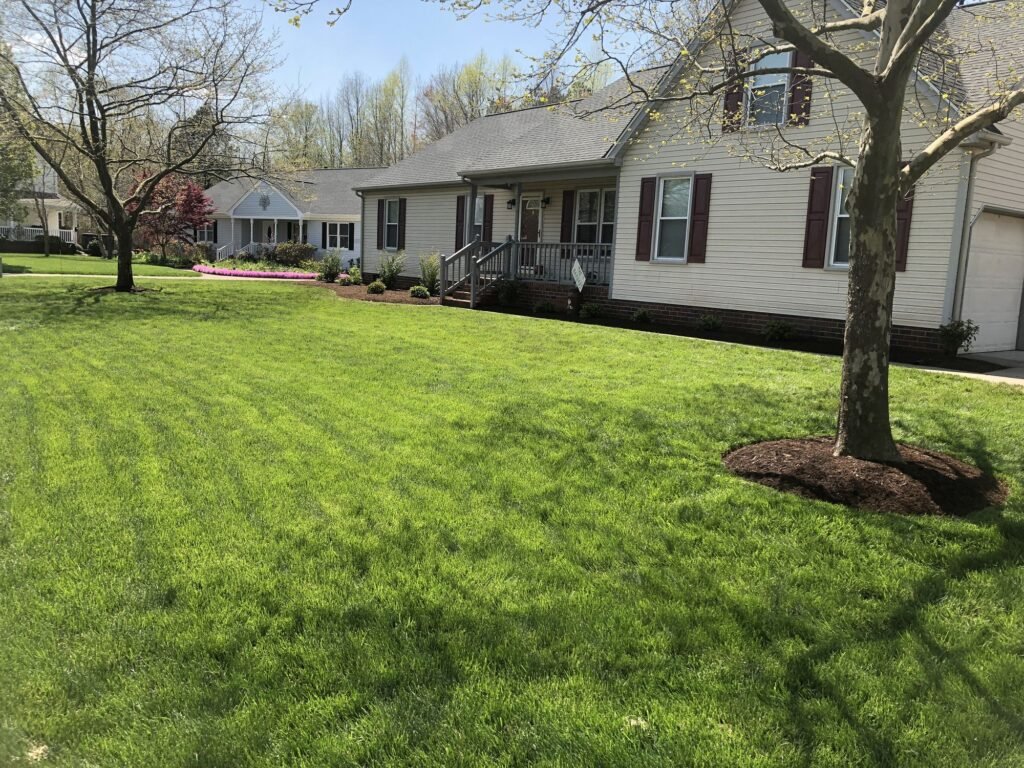
We prepare the soil, fix the grade so water drains away from the house, and lay fresh sod.
A finished lawn the same day, or seed when the timing is right.

What’s included
A new lawn is only as good as the ground under it, so most of the work happens before the first roll goes down.
 01
Clearing the old lawn
Removing old grass, weeds, roots and debris.
 02
Grading
Rough and finish grading, so the new lawn is smooth and slopes away from the house.
 03
Soil preparation
Loosening compacted ground and adding topsoil where the soil is poor.
 04
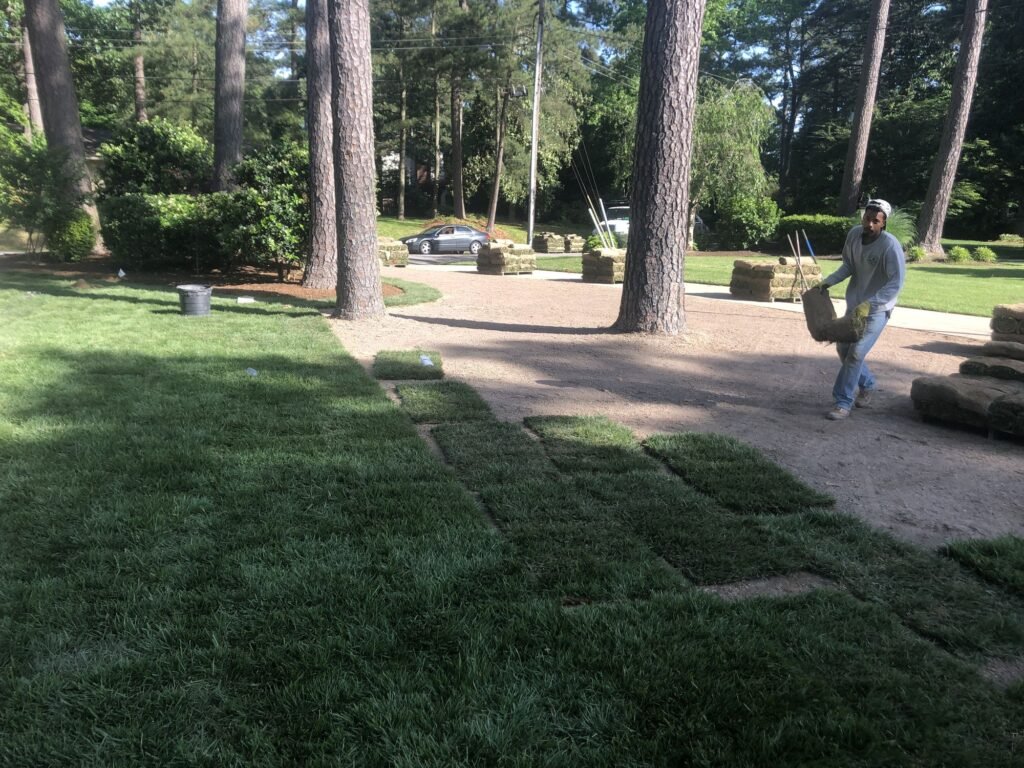
Laying the sod
Laid tight with staggered seams, then rolled for good contact with the soil.
Sod or seed?
Sod
Instant, holds slopes
Seed
Costs less, takes weeks
Sown with a straw or mulch cover for areas that will be seeded.
Often both
Sod where the lawn is seen and used most, seed on the edges.
Which grass grows best here
Coastal Virginia sits in the transition zone, where both cool-season and warm-season grasses grow. We recommend the grass that fits your yard, not one type for every job.
Cool-season
Tall fescue
Stays green most of the year and handles some shade. Does best laid in fall and spring.
Warm-season
Bermuda
Loves full sun and summer heat, copes with sandy soil and salt air, and turns tan in winter.
Warm-season
Zoysia
Also a warm-season grass for sun and heat. Like Bermuda, it roots fastest from late spring through summer.
Seed timing
Sow fescue in early fall and warm-season grasses in late spring. Sod can go down most of the year, as long as the ground is not frozen.
What a new lawn costs
It depends mainly on the size of the area and how much preparation the ground needs. Laying sod on a cleared, level yard is simpler than removing an old lawn, regrading and bringing in topsoil first, so we do not quote over the phone. Every estimate is free and done on site.
- The size of the lawn in square feet
- Sod or seed, and the type of grass
- Removing the old lawn, weeds and roots
- Grading and topsoil the ground needs
- Access for equipment and sod pallets
- Drainage to fix first, so the lawn lasts
The first few weeks
We install lawns; we do not offer mowing or lawn maintenance. These steps get new sod off to a strong start. After the first month, water less often but more deeply to grow deep roots.
Watering instructions. Clear instructions for the first weeks, so the new lawn takes.
Weeks 1–2
Water every day
For the first two weeks, enough to soak the soil under the sod, and more often in hot weather.
About 2 weeks
Keep off it
Keep people and pets off the new sod until it roots, usually about two weeks. Gently lift a corner: if it holds, the roots have taken. Wait about a month before heavy use such as games, parties or a dog run.
Once the roots hold
First mow
Mow once the roots hold, and never cut off more than a third of the grass blade.
Common questions
Can you lay new sod over my old grass?
No. New sod needs direct contact with prepared soil to root. Laid over old grass and weeds, it roots poorly and dries out. We remove the old lawn and prepare the soil first.
Why did my old lawn die?
The most common causes are standing water, compacted soil, a grade that slopes the wrong way, or a grass that does not suit the sun or shade. We check for these first, and if water is the problem we fix the drainage before laying new sod.
Free on-site estimate
Get a free sod estimate
Tell us about the area and what happened to the old lawn. Open Monday to Friday 7 AM–5 PM and Saturday 7 AM–1 PM.