Service · Virginia Beach, Chesapeake & Norfolk
Landscape design & planting
New planting beds, trees and shrubs, palms, river rock beds and low-water xeriscapes for homes and businesses.
We plan the layout with you on site and install it ourselves, supervised by the owner.
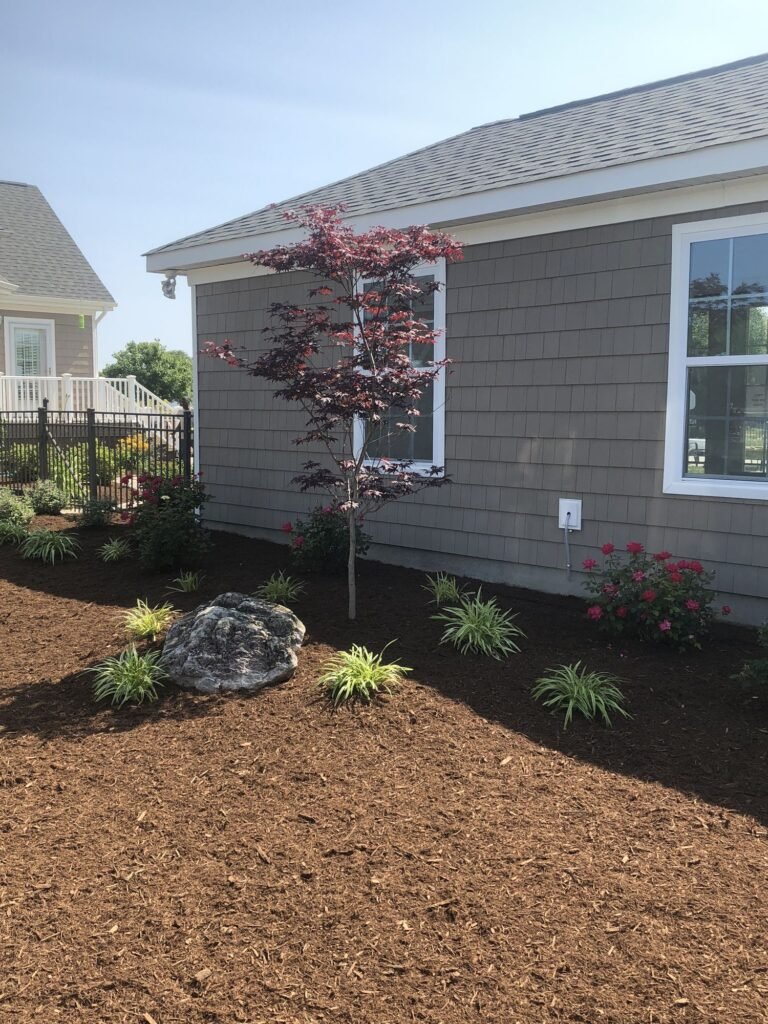
Tree & boulder 
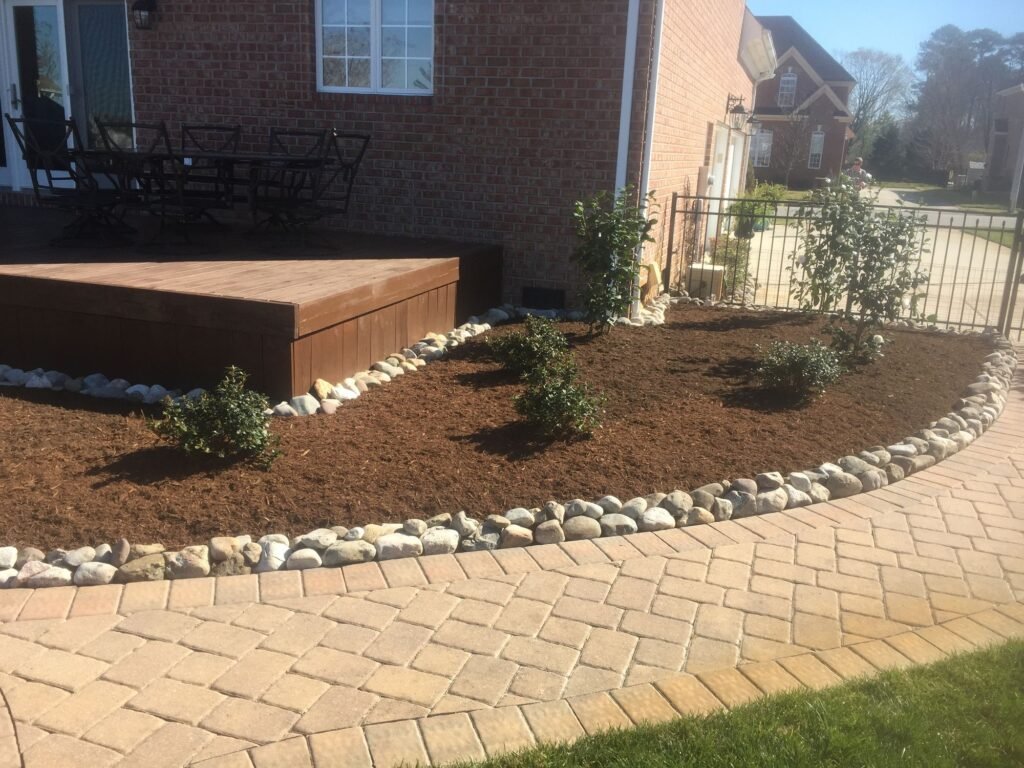
River rock 
Round bed 
Flowering bed
What’s included
One company from the first sketch to the final cleanup, so the finished yard matches the plan.

- 01
Landscape design
The layout of beds, plants, paths and focal points, planned around how you use your yard.
- 02
New planting beds
Clean, curved bed lines with edging, boulders and accents.
- 03
Tree & shrub planting
From foundation plantings to privacy screens and shade trees.
- 04
Palms & ornamental trees
Cold-hardy palms, Japanese maples and crape myrtles as focal points.
- 05
Mulch, river rock & gravel beds
To finish beds, hold moisture, keep weeds down and handle runoff, including low-water xeriscaping.
- 06
Bed makeovers
Removing overgrown plants and weeds, reshaping the beds and replanting.
Often built together
We can plan and build them as one project.
Mulch, rock or both?

Zone 8a
Virginia Beach, Chesapeake and Norfolk are in USDA hardiness zone 8a. We choose plants for these conditions and for the sun and shade in each part of your yard, and recommend specific plants after seeing it.
Plants that thrive in coastal Virginia
- Heat and humidity. Hot, humid summers and mild winters, often on sandy soil that drains fast and dries out.
- Salt and wind. Close to the water, plants also face salt spray and wind, so we pick ones that tolerate them.
- Wet low lots. On low lots the ground can stay wet after storms, so beds and plants are planned with the drainage in mind.
What does well
What landscaping costs
It depends on the size of the area, the number and size of the plants, and how much preparation the beds need. Refreshing a bed with new mulch and a few shrubs is a small job; a full front-yard design with new beds, trees and rock is a larger project, so we do not quote over the phone. Every estimate is free and done on site.
- The size of the area and the number of beds
- The number, type and size of plants and trees
- Removing old plants, roots and weeds
- Soil preparation and grading
- Mulch, decorative rock, edging and boulders
- Related work: sod, pavers, lighting or drainage
From sketch to planted bed
Fall, from September to November, is the best time to plant trees and shrubs here: the soil is still warm and roots grow through the winter. Spring is second best; summer planting works too, with more watering.
- FallSeptember to November · best
- SpringSecond best
- SummerWorks, with more watering
- 1
Walk and design
We walk the yard with you and look at sun, shade, soil, drainage and how you use the space, then lay out the beds and plants we recommend, with a clear written price.
- 2
Prepare and plant
We remove old plants and weeds, shape the beds, prepare the soil, then plant the trees and shrubs and set edging, boulders and rock.
- 3
Mulch and hand over
We spread mulch or rock, leave the site clean and give you watering instructions for the new plants.
Common questions
How should I water new trees and shrubs?
Water deeply rather than often: soak the root ball two to three times a week for the first few weeks, then gradually less, adjusting for rain and heat. New plants need regular water through their first summer.
Do you plant palm trees in Virginia Beach?
Yes. Cold-hardy palms such as windmill, needle and sabal palms survive coastal Virginia winters. Palms root best when planted in late spring or early summer, once the soil is warm, and need regular water through their first season.
What is xeriscaping, and does it work here?
Xeriscaping is landscaping that needs little watering: decorative rock and gravel combined with drought-tolerant plants. It works well in sandy soil, in hot, sunny spots and where irrigation is hard to reach, and the rock handles heavy rain better than mulch.
Free on-site estimate
Get a free landscaping estimate
Tell us what you would like to change in your yard and we will come walk it with you. Open Monday to Friday 7 AM–5 PM and Saturday 7 AM–1 PM.