Service · Virginia Beach, Chesapeake & Norfolk
Patios, walkways & walls
Paver patios, walkways, stepping-stone paths, driveways, stamped concrete, custom steps and retaining walls.
Built on a properly excavated and compacted base, so they stay level for years.
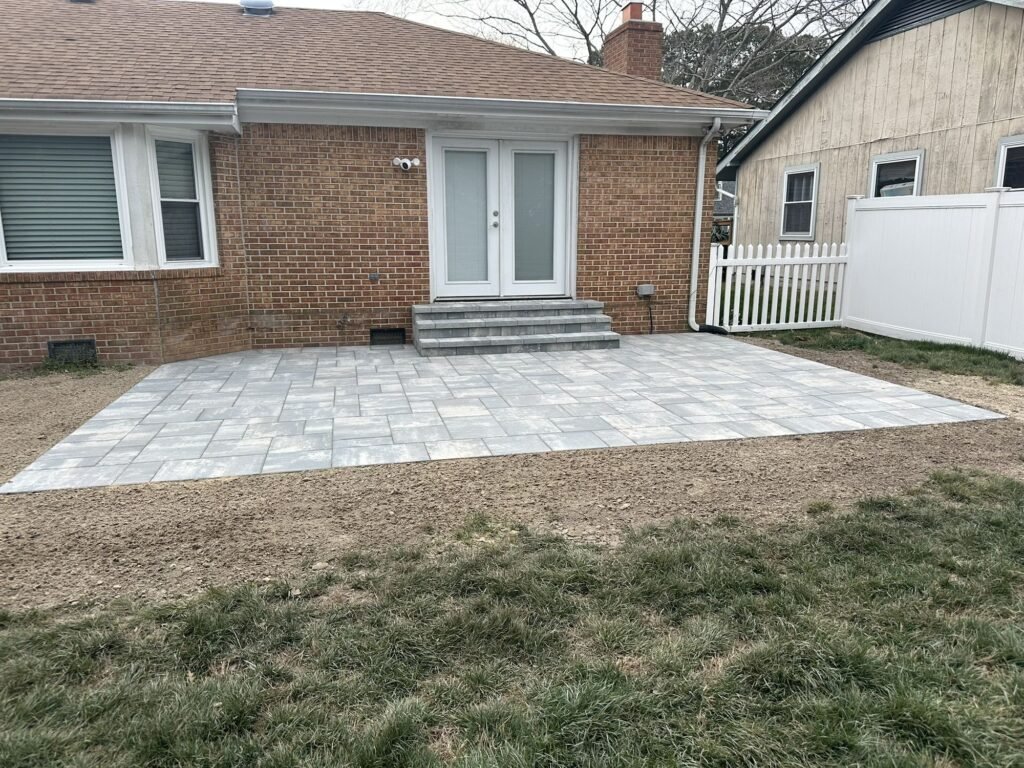
A-1 project · Herringbone walkway
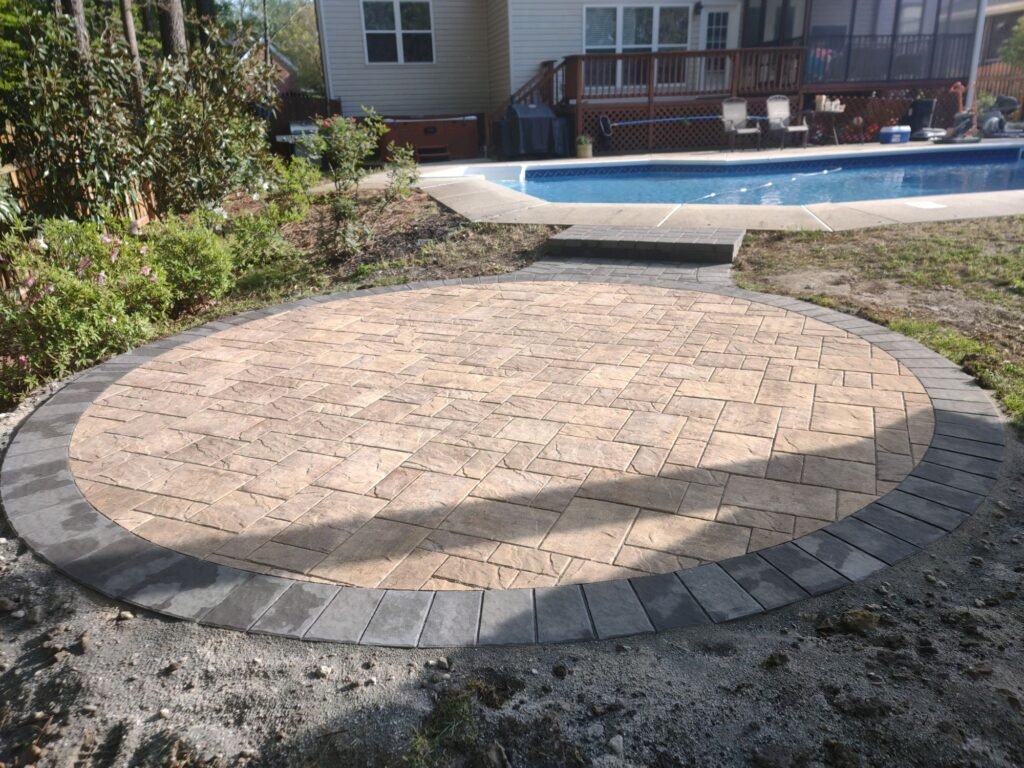
What we build
Pavers come in many colors, sizes and patterns. We help you choose one that suits your home and how you will use the space.
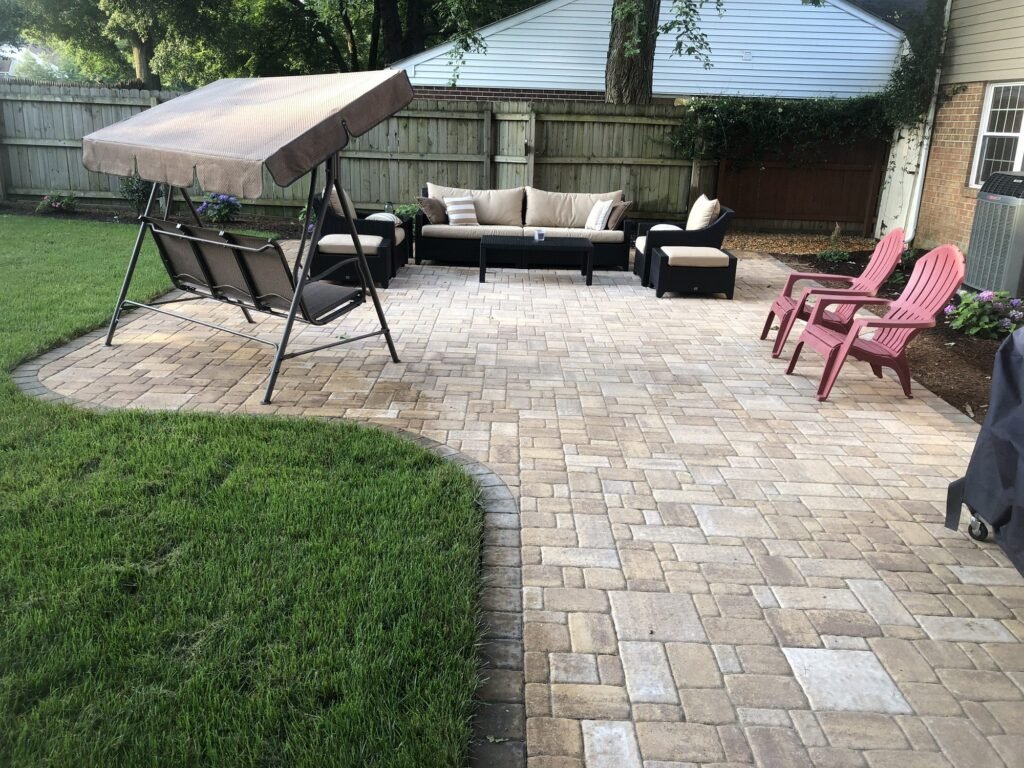
Paver patios
For dining, seating and outdoor living, in the size and shape that fits your yard.
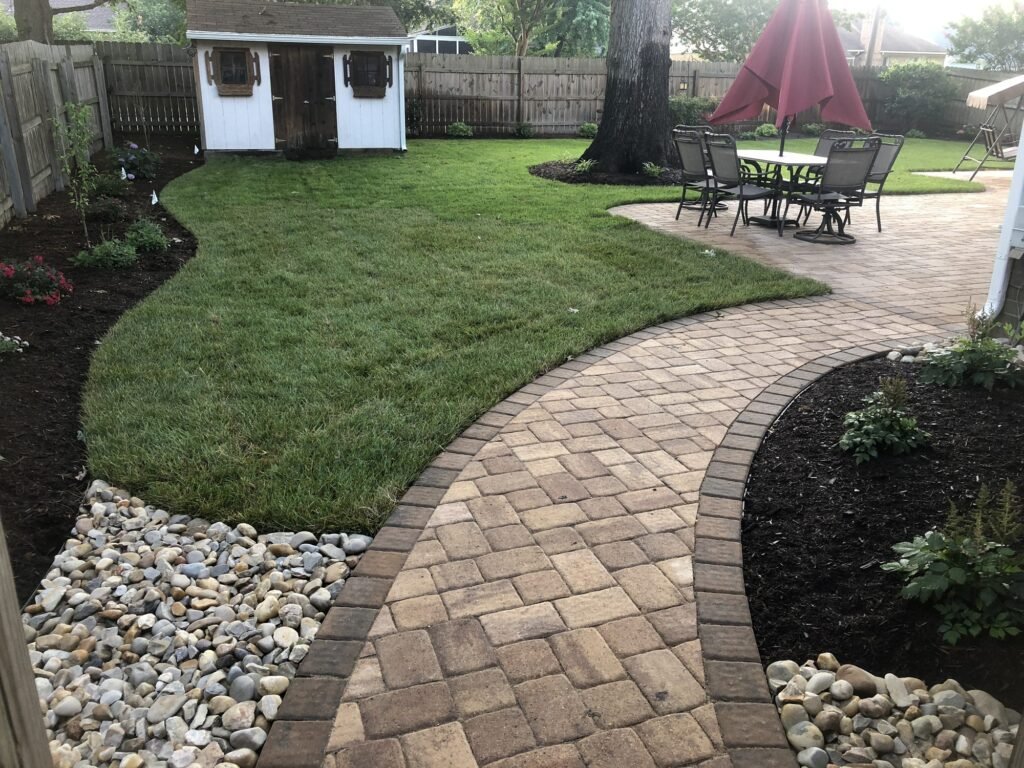
Walkways & stepping-stone paths
To the front door, along the side of the house or through the garden, straight or curved.

Driveways
New driveways and upgrades to existing ones, built on a deeper base that carries the weight of cars.

Retaining walls
Hold back soil on slopes, create level areas and raise planting beds, built with drainage behind the wall.

Stamped concrete & custom steps
Concrete with the look of stone or brick, and steps that connect patios, walkways and levels of the yard safely.

Borders, edging & pads
Paver borders and metal edging for a clean edge, plus level shed pads and trash-can pads.
Popular patterns
Planning a fire pit, an outdoor kitchen or a pergola too? We build those around the patio: see outdoor living.
What goes under the pavers
Paver patios and walkways fail from the bottom up. Sunken spots, wobbly pavers and puddles almost always come from a base that was too thin or not compacted.
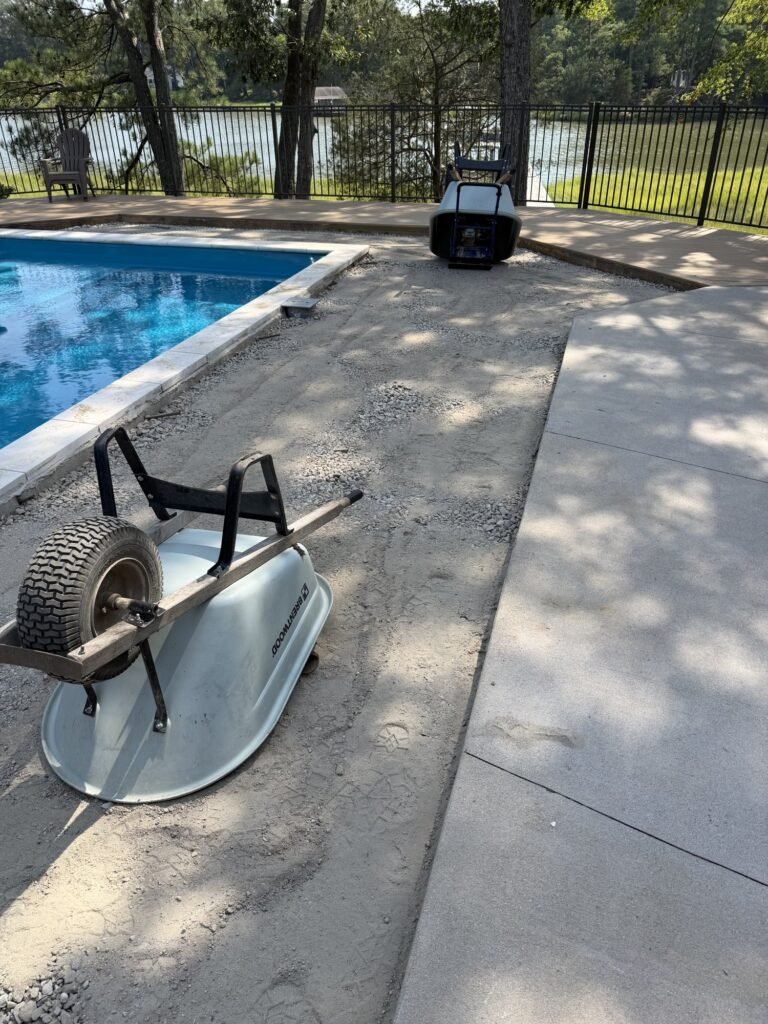
7 steps
From bare soil to compacted joints. The base under the pavers is most of the work.
Pavers
Laid in your pattern, cut to fit the edges and curves, joints swept full of sand and the surface compacted. Edge restraints lock them in place.
Sand bed
Screeded level, so every paver sits at the same height.
Crushed-stone base
Added in layers and compacted layer by layer. Deeper under driveways, which carry the weight of cars.
Compacted soil
Excavated to the right depth for the surface and how it will be used, then compacted.
Every surface gets a gentle slope, so rain runs off the patio and away from the house. On low, flat lots we plan the drainage together with the patio.
What a patio costs
It depends on the size and shape of the area, the pavers you choose and how much site preparation is needed. A simple rectangular walkway is a much smaller job than a large curved patio with a retaining wall, so we do not quote over the phone. Every estimate is free and done on site.
- The size of the area, plus curves and cuts
- The type, size and pattern of the pavers
- Base depth and soil conditions
- Removing an old patio, concrete or turf
- Access for equipment and materials
- Retaining walls, steps, borders or drainage
From bare ground to a level patio
Most patios and walkways take from a few days to about a week, depending on size, access and the base work. Spring is the busiest season, so planning in late winter gets you on the schedule sooner.
- 1
Measure and plan
We visit, measure the area, check the grade and drainage, and talk through layout and paver styles. You get a written estimate with the design, materials and base we recommend.
- 2
Dig and build the base
We excavate, compact the soil and build the crushed-stone base in compacted layers, supervised by the owner.
- 3
Lay, lock and clean up
We lay the pavers or build the wall, set the edging and compact the joints, then repair the lawn or beds around the new surface and leave the site clean.
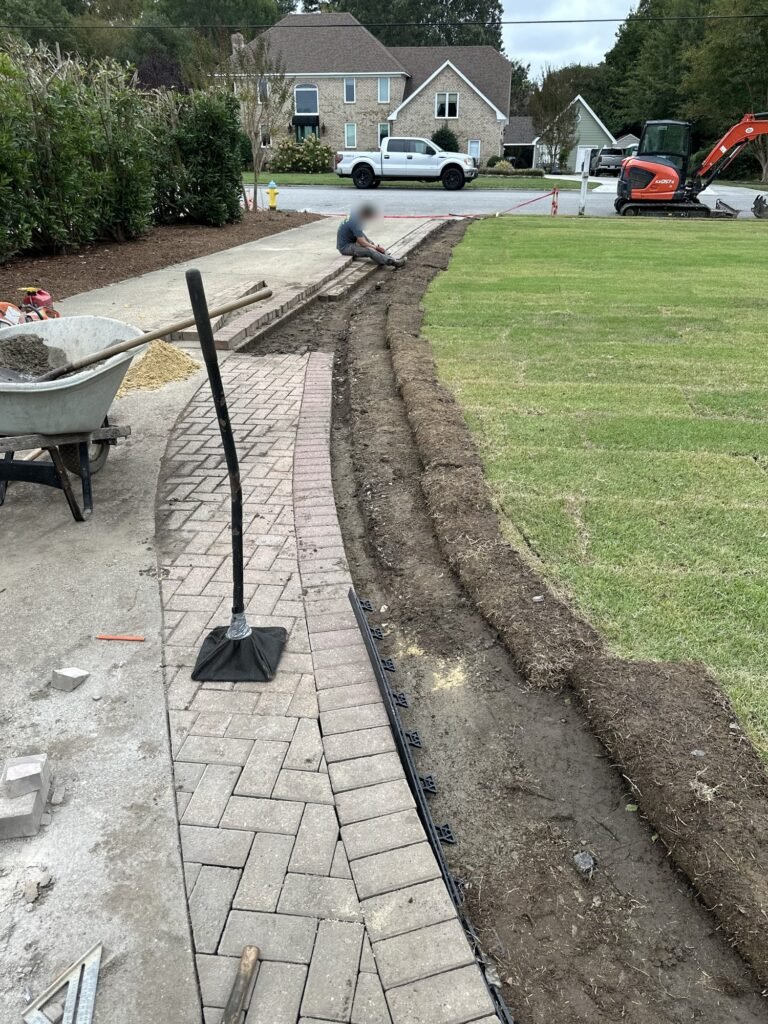
Walkway going in 
Sand bed, leveled 
Laying a brick patio 
Building steps
Common questions
Should I choose pavers, stamped concrete or plain concrete?
Plain concrete usually costs the least. Stamped concrete gives the look of stone or brick in one continuous surface with no joints for weeds, but like any slab it can crack, and it needs resealing every few years. Pavers move slightly with the ground instead of cracking, and a damaged area can be lifted and reset. We build both and recommend what suits your site.
Will weeds grow between the pavers?
A well-compacted base and joints filled tightly with sand keep weeds and ants to a minimum. Over time, sweeping the surface and topping up the joint sand where it has washed out keeps it that way.
How long do paver patios last?
Built on a properly prepared base, a paver patio or walkway lasts for decades. If a paver cracks or an area settles, that section can be lifted and reset without tearing out the whole patio.
When is the best time to build a patio?
Pavers can be installed for most of the year in coastal Virginia; we avoid frozen or rain-soaked ground.
Free on-site estimate
Get a free patio estimate
Tell us what you want to build and where, and we will come take a look. Open Monday to Friday 7 AM–5 PM and Saturday 7 AM–1 PM.