Service · Virginia Beach, Chesapeake & Norfolk
Grading & land clearing
We clear brush, old turf and debris, then shape and level the ground so water drains away from the house.
Ready for sod, planting beds or a patio. Every estimate is free and done on site.
A-1 crew grading a lot
What’s included
Most projects need both rough and finish grading: the first sets the slope, the second makes the surface even.
01
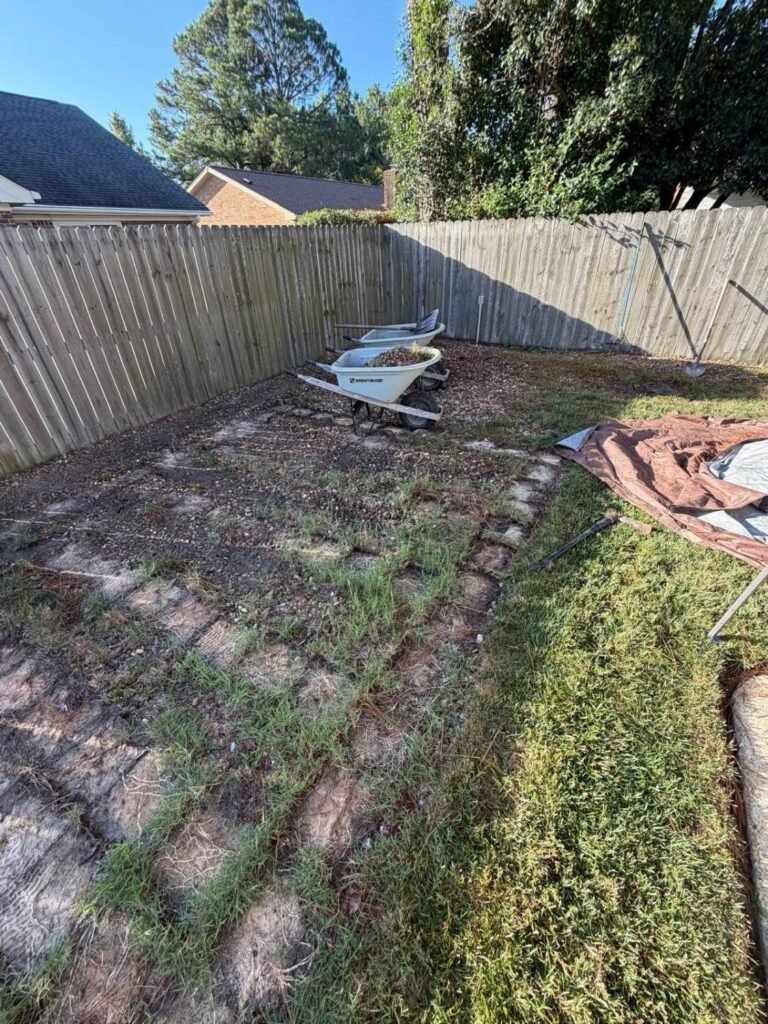
Land clearing
Removing brush, vines, overgrown shrubs, small trees, old turf, roots and debris.
02
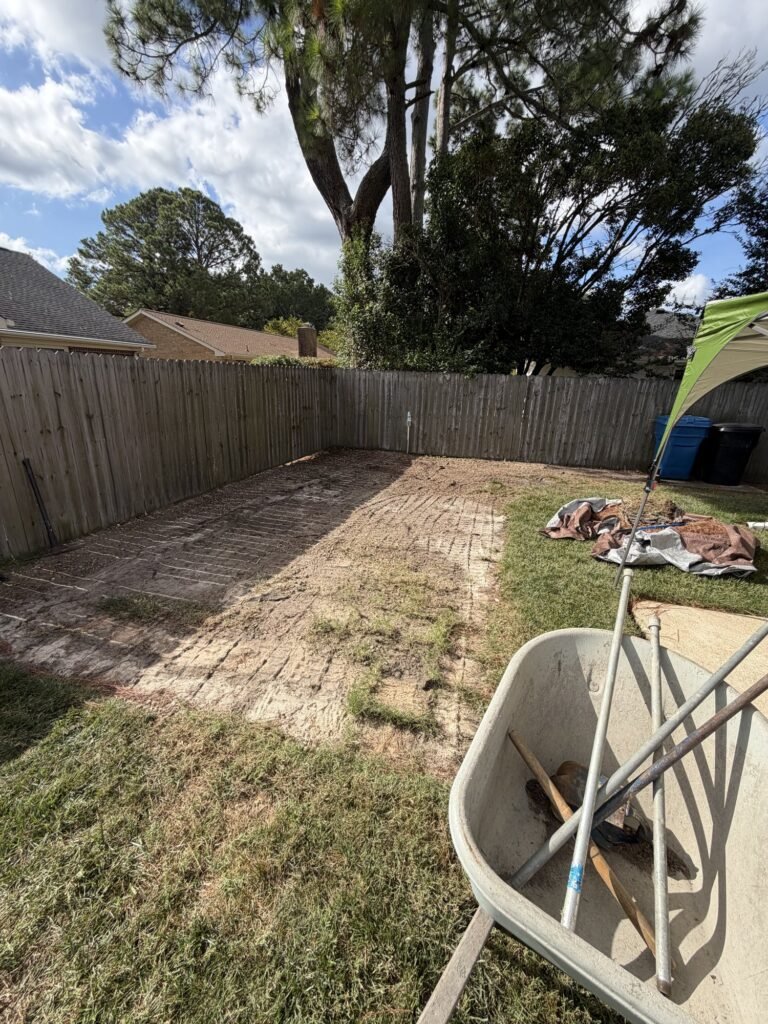
Rough grading
Moving and shaping soil with compact equipment, such as skid steers and mini excavators, to set the overall slope.

03
Leveling
Filling low spots and cutting down high spots, with new soil where it is needed.
04
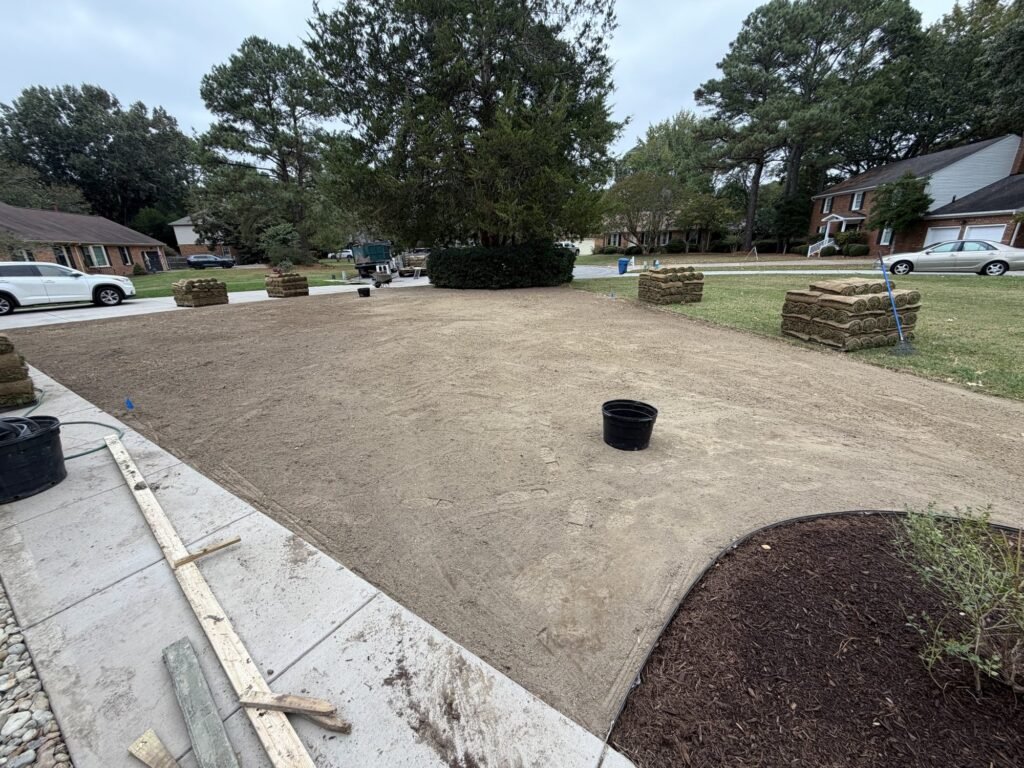
Finish grading
Raking the surface smooth and even, so sod, seed or pavers sit flat.
Slope away from the house
Shaping the ground so rainwater moves away from the foundation.
Finishing
Covering the new grade with sod, seed or mulch so the soil stays in place.
1–2 days
Regrading a typical backyard is often finished in a day or two. Larger or overgrown lots take longer.
When you need it
- Water runs toward the house
- Bumpy or sunken lawn
- Overgrown lot
- Before sod or a patio
- Ruts after construction
Why grading matters here
On a flat lot a difference of a few inches decides where rainwater goes: away from the house, or against the foundation and into the lawn.
- Six inches in ten feet. A common guideline is for the ground to drop about six inches over the first ten feet away from the house.
- The cheapest drainage fix. Getting the grade right is often the least expensive way to stop water collecting, and the first step before any new lawn or patio.
- Settled soil. Soil sinks along the foundation, over old trenches and where stumps were removed. Regrading brings it back up.
Water still standing? See yard drainage · local ground in Virginia Beach, Chesapeake and Norfolk
What grading costs
It depends on the size of the area, how overgrown it is and how much soil has to be moved or brought in. Leveling a small backyard is a much smaller job than clearing and regrading a whole lot, so we do not quote over the phone. Every estimate is free and done on site.
- The size of the area and how overgrown it is
- How much soil is moved, removed or brought in
- Stumps, roots and debris to remove
- Access: fences, gates, narrow side yards
- Drains or swales needed with the grading
- The finish: sod, seed, mulch or a paver base
Clear, shape, finish
We schedule around the weather: soil soaked from rain cannot be graded well, because it smears, ruts and compacts. You get a clear timeline with your written estimate.
- 1
Walk and plan
We walk the property, check the slope and see where water flows and collects, then explain the work and the grade we will set in a written estimate.
- 2
Clear and grade
We remove brush, old turf, roots and debris, shape the rough grade, then finish it smooth and even, supervised by the owner.
- 3
Cover and clean up
We cover the new grade with sod, seed or mulch so it stays in place, and leave the site clean.
Common questions
What is the difference between rough and finish grading?
Rough grading moves the bulk of the soil and sets the overall slope of the yard, usually with equipment. Finish grading is the final, careful smoothing of the top few inches, so the surface is even and ready for sod, seed or pavers. Most projects need both.
Can grading fix standing water in my yard?
Often, yes. If water collects because the ground slopes the wrong way or has low spots, regrading moves it toward a safe outlet. If the water table is high or there is nowhere for the water to go, grading is combined with a French drain or yard drain. See our drainage solutions.
Do you remove trees when you clear a lot?
Brush, vines, overgrown shrubs and small trees are part of land clearing. Larger trees need more care and equipment, so we handle them as a separate tree removal job and include them in your estimate if needed.
How long does grading take?
Regrading a typical backyard is often finished in a day or two. Clearing and grading a larger or heavily overgrown lot takes longer, and we wait for soaked soil to dry before grading it.
Free on-site estimate
Get a free grading estimate
Tell us what you want to clear or level, and what you plan to do with the area. Open Monday to Friday 7 AM–5 PM and Saturday 7 AM–1 PM.